
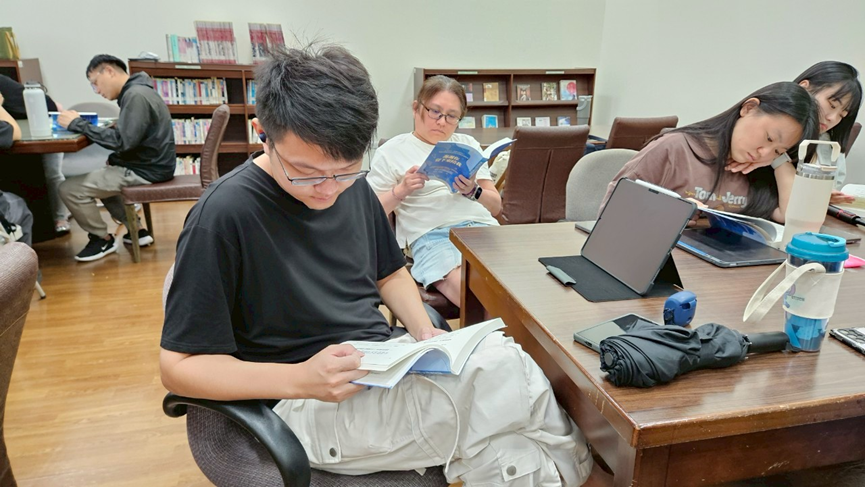
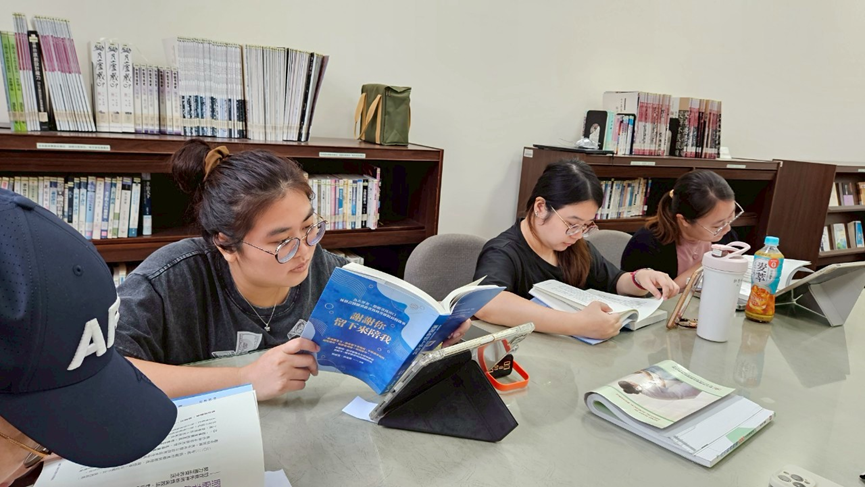
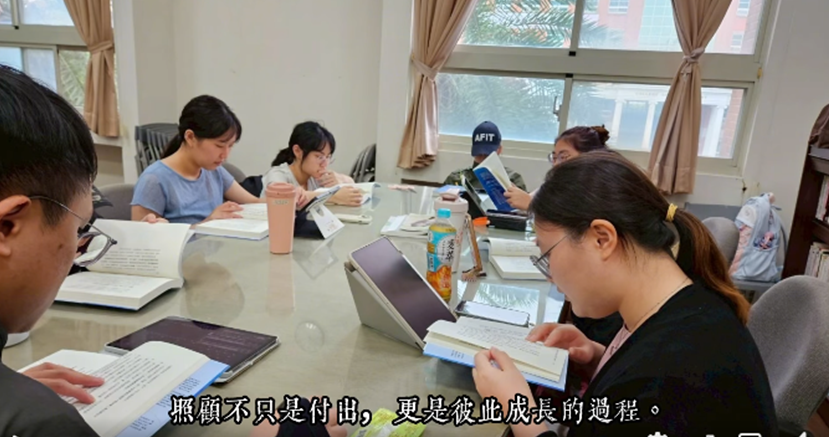
In the autumn semester of their second year, on October 2, 2025, students of the Asia University Post-Baccalaureate Program of Nursing participated in a deep reading activity led by Professor Hui-Chi Li. The selected book was Thank You for Staying with Me, written by Dr. Ching-Yun Lin. Through guided reading and group sharing, the activity encouraged students to reflect on the meaning of long-term care and the inner strength of caregivers.
The book portrays the author’s journey of accompanying her husband through the ups and downs of life after he was diagnosed with dementia. From helplessness and perseverance to learning how to let go, the narrative reveals the most moving force in caregiving—understanding and companionship. Professor Lee emphasized that this reading activity was not merely a literary appreciation, but a profound dialogue of the heart. It aimed to help students approach future clinical practice with greater gentleness and wisdom when interacting with those under their care.
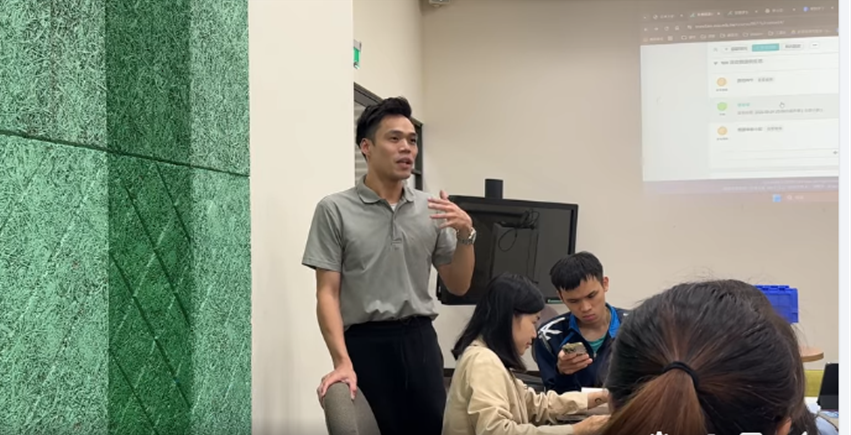
Student Chih-Ling Yeh shared that appropriate approaches and suitable treatments can help establish effective communication with people living with dementia. However, she noted that even more important is accompanying them with unceasing smiles and patience. From the perspective of individuals with dementia, the world often feels unfamiliar and even frightening. By understanding this, caregivers can embrace their emotions and needs with a softer and more compassionate heart.
Another student, Hung-Kai Lee, expressed his deep emotional response, stating that dementia is not the end of life, but merely another winding path in the aging process. He described caregivers as courageously running on a track that does not belong to them, striving to bring their loved ones back onto the path of normal aging—a journey that truly reflects remarkable bravery.
Student Li-Ting Weng offered a deeper insight, noting that caregivers are not controllers, but rather coordinators and empathetic companions. Care should not be shaped solely by caregivers’ expectations; instead, it requires recognizing patients’ needs and limitations and making respectful, appropriate choices. “Not forcing” is not a form of giving up, he explained, but a sign of gentle maturity—an acceptance of reality and a release from mutual pressure.
Director Pi-Chu Lin and Professor Hui-Chi Li concluded that through this deep reading activity, students gained not only professional knowledge of nursing care, but also a profound appreciation of the human warmth at the heart of caregiving relationships. In the future, they will transform this understanding into strength for clinical practice, upholding a person-centered philosophy in every care interaction and allowing love and respect to become the gentlest guiding light on their nursing journey.
They also expressed sincere gratitude to the University President and the Library Director for providing each student with a copy of the book—a gift that teaches gentleness and gratitude. Through this quiet and reflective reading experience, students came to understand the true meaning of compassion and thankfulness, carrying this warm and flowing current with them into their future professional lives.
 |
 |
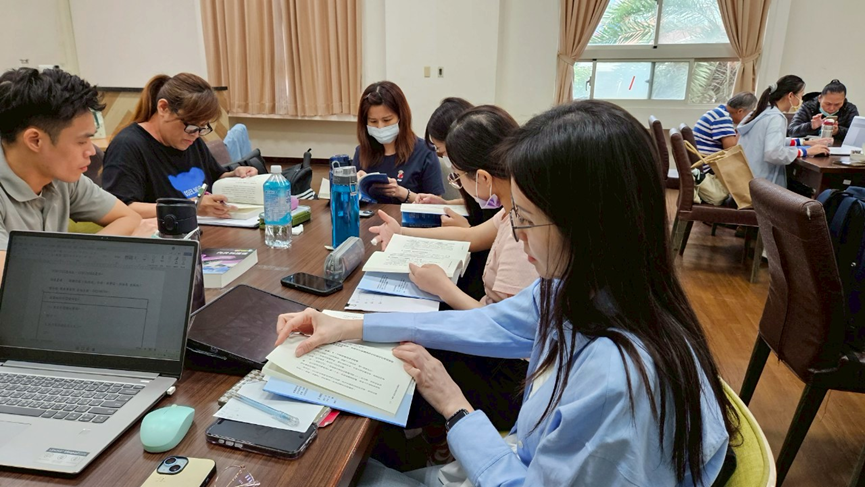 |
| Photo: Students Engaged in Focused Reading | Photo: Students Engaged in Focused Reading | Photo: Students Engaged in Focused Reading |
 |
 |
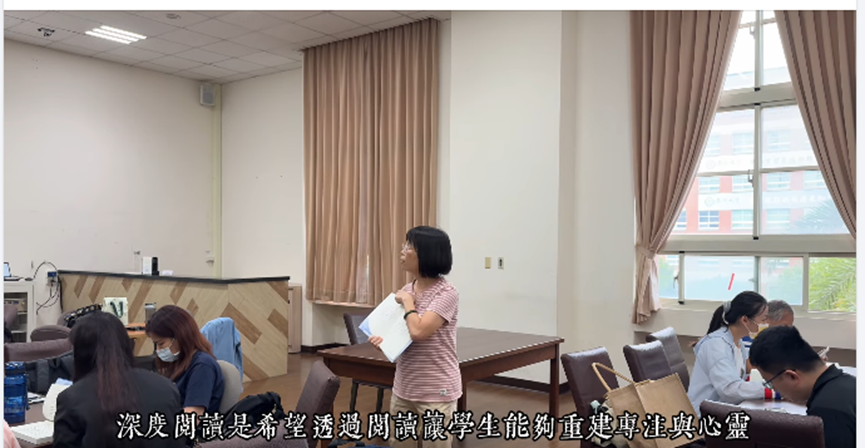 |
| Photo: Students Engaged in Focused Reading | Photo: Students Sharing Their Reflections | Photo: Professor Hui-Chi Li Explaining the Purpose of Deep Reading |